Niger Delta Ethnic Nationalities Reject Centralized Pipeline Surveillance System
- by Kalaboy, River State, HSN
- yesterday
- 164 views

.....As The Forum Demands Accountability in Oil Surveillance Contracts
The attention of the Niger Delta Stakeholders Forum and the Niger Delta Ethnic Nationalities has been drawn to the parliamentary session held on 27th May 2026 in Owerri by the Joint Committees of the House of Representatives on Upstream, Downstream, Host Communities, Public Petitions, and allied Committees.
This session marks the second parliamentary engagement within sixty (60) days aimed at defending and legitimizing the operations of Tantita Security Services Nigeria Limited against the growing demand by Niger Deltans for the decentralization of pipeline and oil and gas infrastructure surveillance. The first session was held on 8th April 2026.
At the end of both sessions, the Committees passed votes of confidence in Tantita Security Services Nigeria Limited while dismissing calls for decentralization as “anti-Niger Delta” and “baseless.”
Curiously, no such votes of confidence were passed on the Nigerian Army, the Nigerian Navy, the Nigerian Air Force, the Nigeria Police Force, the Nigeria Security and Civil Defence Corps, or even the Nigerian state itself.
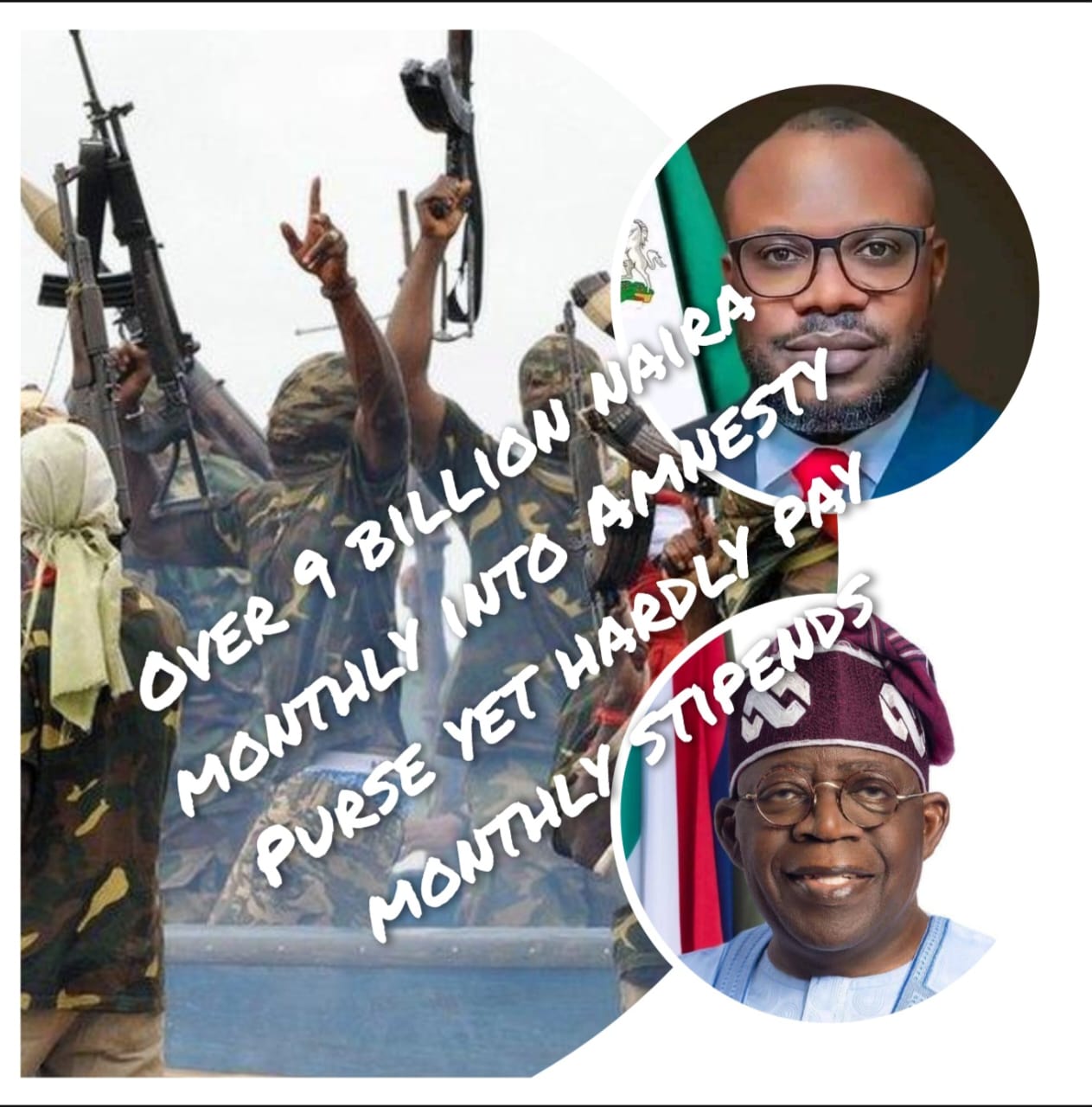
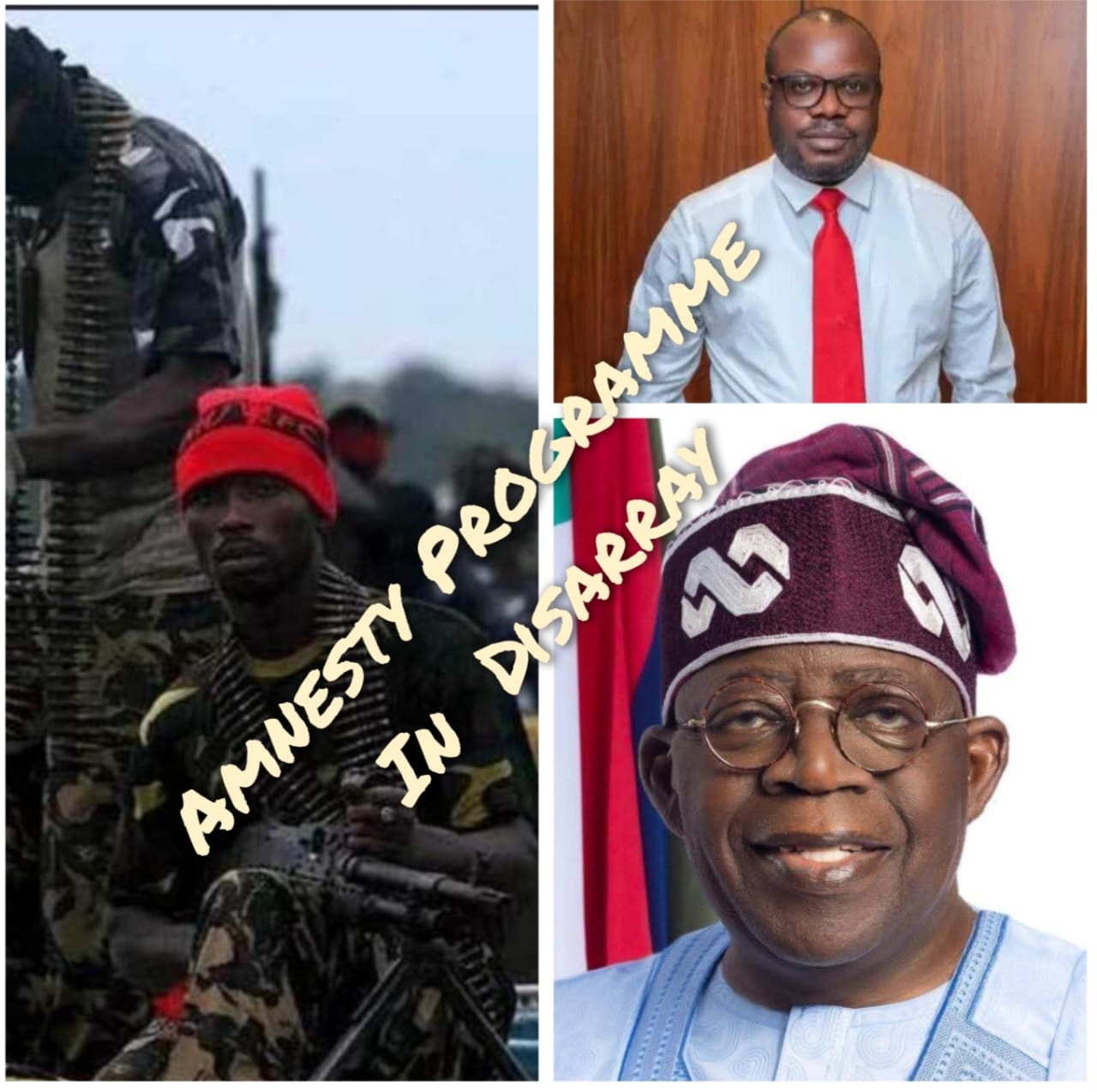
Instead, parliamentary attention appears overwhelmingly focused on validating a private security company headed by the only former agitator who, in recent history, openly carried arms against the Nigerian state.
This raises troubling questions ?
Why is the National Assembly investing enormous parliamentary energy in defending a private contractor while Nigeria battles worsening insecurity and economic hardship?
Why has no emergency joint parliamentary session been convened on the killings across Northern Nigeria, rising kidnappings in the South-West, the collapse of power supply, poor federal roads, rising healthcare and education costs, or the broader economic hardship facing Nigerians?
As we speak, teachers and pupils kidnapped in Ogbomosho, Oyo State, in South-West Nigeria remain in captivity, with reports indicating that the male teacher involved was brutally killed. Yet, no parliamentary vote of confidence has been passed on the suffering Nigerian people.
Even more disturbing is the failure of the National Assembly to convene a major emergency session on Nigeria’s declining crude oil revenue despite repeated claims of improved pipeline security.
The Federal Government’s 2026 budget was benchmarked at approximately 1.84 million barrels per day and a benchmark oil price of about $64.85 per barrel.
Industry production reports indicate that Nigeria has continued to record significant shortfalls below this benchmark.
The reported monthly production figures reveal the following:
January 2026: Approximately 1.63 million barrels per day, representing a shortfall of about 210,000 barrels per day and an estimated monthly production deficit of approximately 6.5 million barrels.
February 2026: Approximately 1.48 million barrels per day, representing a shortfall of about 360,000 barrels per day and an estimated monthly production deficit of approximately 10.1 million barrels.
March 2026: Approximately 1.52 million barrels per day, representing a shortfall of about 320,000 barrels per day and an estimated monthly production deficit of approximately 9.9 million barrels.
April 2026: Approximately 1.56 million barrels per day, representing a shortfall of about 280,000 barrels per day and an estimated monthly production deficit of approximately 8.4 million barrels.
In cumulative terms, Nigeria’s crude oil production shortfall between January and April 2026 is estimated to have exceeded 34 million barrels when measured against the Federal Government’s budget benchmark.
At the Federal Government’s benchmark oil price of approximately $64.85 per barrel, this production gap translates into estimated gross revenue losses exceeding $2.2 billion within the first four months of 2026 alone.
At prevailing exchange rates, this represents several trillions of naira in lost national revenue—resources capable of significantly improving roads, electricity, healthcare, education, security, and broader economic stabilization.
Yet, despite these glaring losses, sections of the National Assembly continue organizing repeated sessions centered almost entirely on defending one surveillance contractor.
This contradiction naturally compels Nigerians to ask:
Who exactly is the National Assembly serving—the Nigerian people or private economic interests?
The Forum is further disturbed that the script currently being played by sections of the National Assembly aligns with growing public opinion alleging a broader plan to eventually revise the Petroleum Industry Act (PIA) in a manner that institutionalizes and expands the operational control of Tantita Security Services Nigeria Limited across oil and gas infrastructure throughout the Niger Delta.
From the repeated parliamentary endorsements, orchestrated votes of confidence, and aggressive dismissal of dissenting voices, Nigerians can clearly see a pattern emerging.
The Niger Delta people can see through this grand plan.
No democracy should permit one private surveillance structure to gradually evolve into an untouchable parallel authority over strategic national assets.
We listened carefully to the presentation made by Professor Samuel Chisa Dike, particularly his argument that the relationship between Tantita and the NNPCL is purely contractual.
While contractual relationships are recognized under law, pipeline surveillance in the Niger Delta is not an ordinary commercial transaction.
It directly affects national security, federal revenue, and community stability.
The balance of power within the Niger Delta; And the future peace of the Nigerian state
Nigerians therefore reserve the constitutional and moral right to question any arrangement capable of destabilizing national cohesion.
We reject attempts to falsely portray the demand for decentralization as “anti-Niger Delta.”
Nothing could be further from the truth. The demand is rooted in equity, inclusion, fairness, local participation, and operational efficiency.
The principle remains simple: “Let the locals protect the assets within their own domains.”
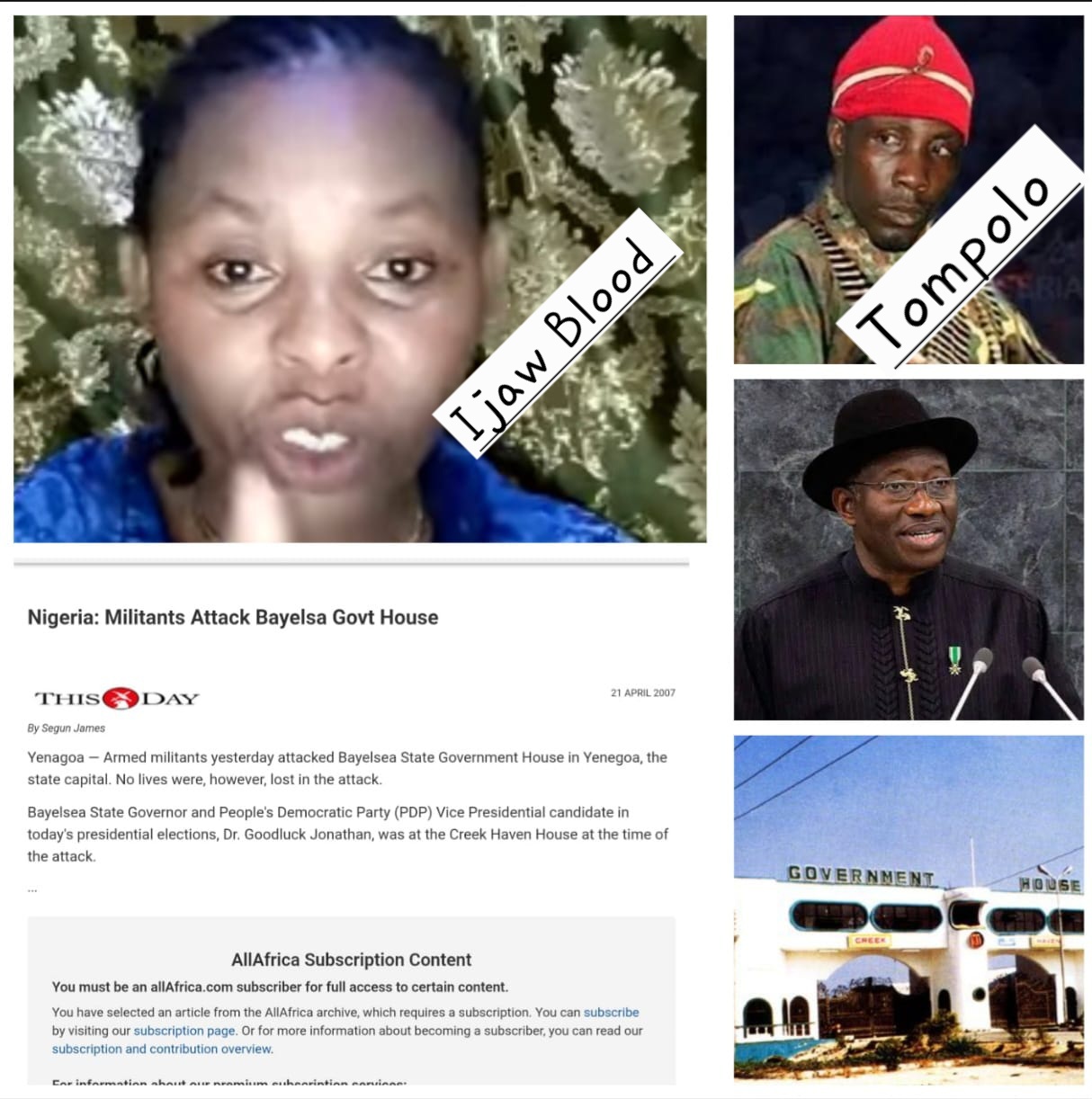
Before 2015, under former President Goodluck Jonathan, pipeline surveillance responsibilities were decentralized across the Niger Delta states.
The outcome was evident:
Crude oil production exceeded 2.5 million barrels per day;
Communities actively participated;
Intelligence gathering was decentralized;
And no single structure monopolized operational influence.
The dismantling of that framework created the vacuum that eventually contributed to the emergence of the Niger Delta Avengers by persons being patronized today.
It is therefore intellectually dishonest to describe calls for decentralization as “anti-Niger Delta.”
The Forum also notes with concern the repeated attempts to portray critics of the current arrangement as “interlopers” or individuals merely seeking a “piece of the cake.”
This narrative is reckless and divisive.
Many of those raising concerns today were among the responsible stakeholders who resisted the spread of the Niger Delta Avengers crisis beyond the Escravos axis in Delta State.
Several stakeholders across the Niger Delta took deliberate positions to prevent militant activities from spreading into their territories.
In parts of the South-West corridor adjoining the Niger Delta, decisive measures were taken to block strategic waterways and access routes, thereby preventing any extension of attacks toward Lagos and other major economic hubs.
Had responsible stakeholders acted otherwise at that critical time, Nigeria would have faced far greater economic and national security consequences.
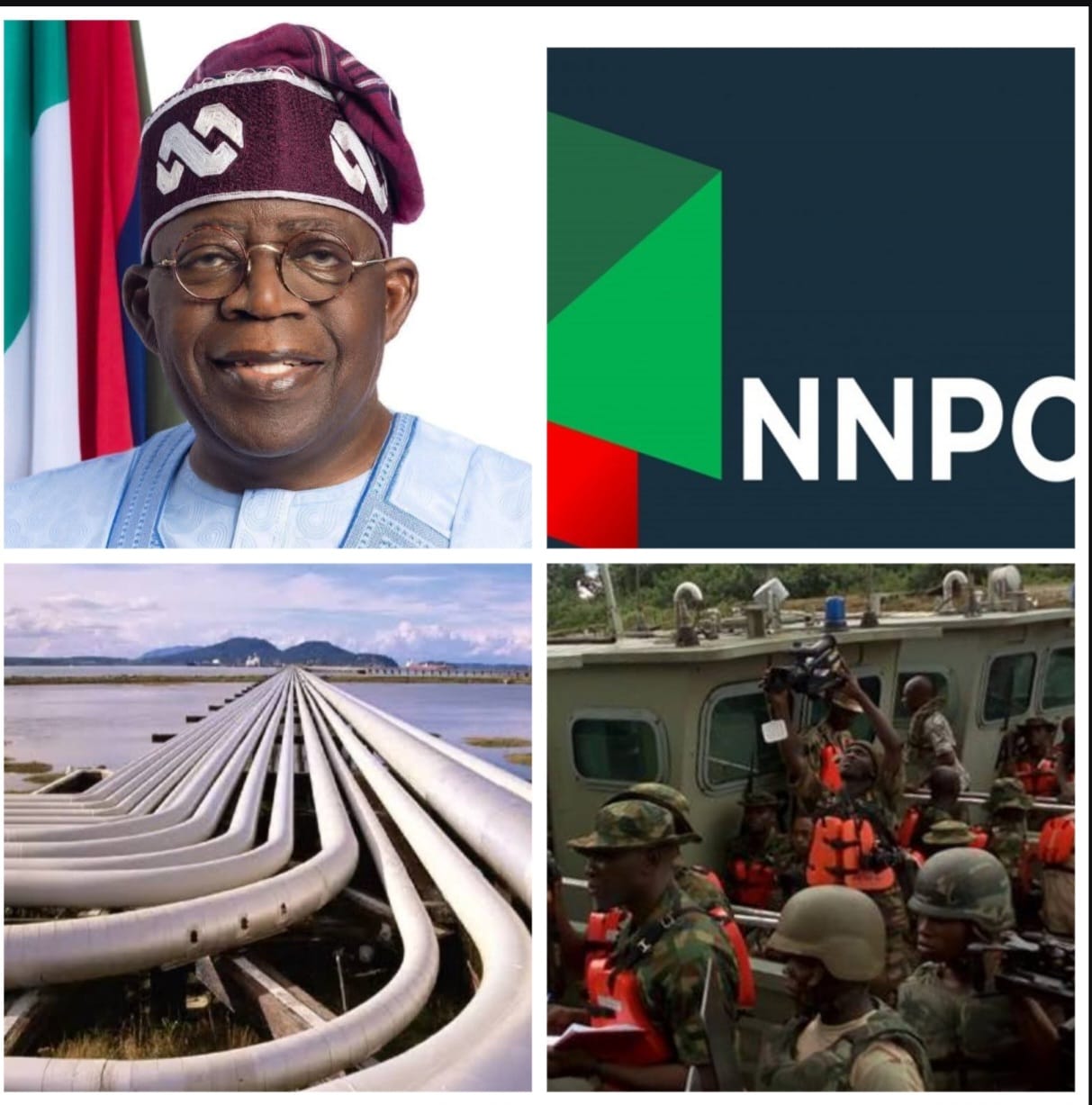
The Forum therefore calls on the Federal Government and the NNPCL not to release any further surveillance-related payments until there is a transparent public review of the entire pipeline surveillance architecture in the Niger Delta.
There is now a growing public perception that the intense parliamentary defense of Tantita may not be unconnected to alleged financial interests and anticipated political funding ahead of future elections.
Nigerians deserve transparency.
The Nigerian people must therefore ask:
If Tantita is allegedly the only company effectively delivering results, why are companies such as Maton Energy and PIL reportedly still being paid?
Why have their contracts not been revoked?
Why is parliamentary attention focused on defending Tantita Security Services Nigeria Limited rather than strengthening national security institutions?
These are legitimate questions deserving legitimate answers.
We caution the National Assembly against creating the dangerous impression that all arms of government have been compromised into validating injustice and protecting one-sided arrangements.
More troubling is the fact that several allegations involving human rights abuses, intimidation, and unlawful killings linked to Tantita’s operations are reportedly already before Nigerian courts.
Yet, rather than allowing due legal processes to proceed independently, parliamentary committees appear more interested in politically sanitizing and institutionalizing the operations of a private security company.
This is dangerous for democracy and national stability.
We restate our position clearly:
Pipeline and oil and gas infrastructure surveillance should be decentralized on a state-by-state basis;
Local communities should directly participate in protecting assets within their territories;
The Nigerian Armed Forces and statutory security agencies must retain ultimate command authority;
The National Assembly must stop presenting private contractual interests as though they are equivalent to the Nigerian state itself;
Parliamentary institutions must focus on Nigeria’s broader national security interests rather than selectively defending private contractors.
Finally, we remind the National Assembly that peace in the Niger Delta was not achieved through monopoly, intimidation, exclusion, or political manipulation.
It was achieved through inclusion, deliberate engagement, decentralized participation, respect for local realities, and balanced leadership.
The attempt to suppress legitimate concerns through parliamentary resolutions and orchestrated votes of confidence will not solve the underlying problems.
Instead, it risks widening distrust and regional tensions.
Nigeria must not allow persons with questionable intentions to drag the Niger Delta back toward instability for selfish economic interests.
History has already taught us the consequences of ignoring these warning signs.
Nigeria must not repeat those mistakes.
Signed:
Dr. Alaye Theophilus (President, Ijaw Youth Council Worldwide)
For and on behalf of the Niger Delta Stakeholders Forum
And Niger Delta Ethnic Nationalities.







0 Comment(s)